

By Property Pros of Muncie | East Central Indiana’s Award-Winning Remodeling Contractor
Every winter, homeowners across Muncie and Delaware County discover water stains spreading across their ceilings and can’t figure out where the leak came from. The culprit, more often than not, is an ice dam: a ridge of ice that forms along the edge of the roof and forces melting snow backward, up and under the shingles. The good news is that ice dams are largely preventable, and fall is exactly the right time to act.
What Causes Ice Dams?
Ice dams start with escaping heat. When warm air from your living space leaks into an under-insulated attic, it warms the roof deck and melts the snow sitting on top. That meltwater runs down the roof until it reaches the cold overhang at the eaves, where it refreezes. Layer by layer, an ice ridge builds up. Once the dam is tall enough, water pools behind it with nowhere to go except beneath your shingles and into your home.
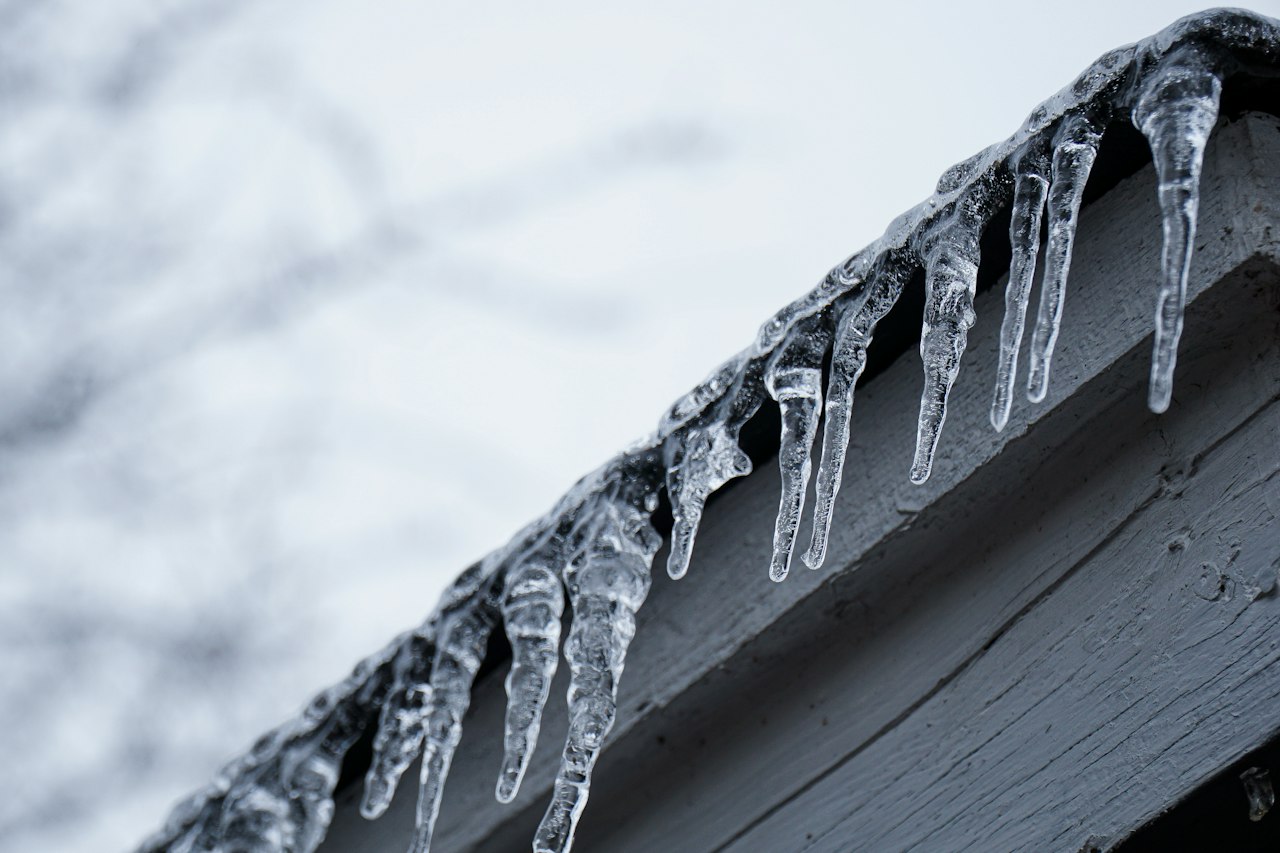
That’s why ice dams are really an attic problem wearing a roof problem’s disguise. Icicles along the gutter line may look festive, but big ones are usually the first visible sign that your roof is melting snow when it shouldn’t be.
The Damage Ice Dams Cause
Left unchecked, ice dams can lead to:
- Water-stained ceilings and walls, and ruined insulation
- Lifted, cracked, or torn shingles along the eaves
- Sagging, bent, or detached gutters from the weight of ice
- Mold and mildew growth inside wall cavities
- Rotted roof decking and fascia that shorten your roof’s life
Prevention Step 1: Insulate the Attic Properly
The single most effective ice dam prevention is a well-insulated attic floor. For Indiana’s climate, that means insulation rated R-49 to R-60. When your attic stays cold, your roof stays cold, and snow melts evenly with the weather instead of from underneath. If you can see your attic floor joists poking through the insulation, you don’t have enough.
Prevention Step 2: Seal Air Leaks and Ventilate
Insulation alone isn’t the whole story. Warm air sneaks into attics through gaps around light fixtures, bathroom fans, chimneys, and attic hatches, and those leaks should be sealed. Just as important is ventilation: soffit and ridge vents keep cold outside air moving across the underside of the roof deck, carrying away any heat that does escape. A properly insulated and ventilated attic is the closest thing there is to ice dam insurance.
Prevention Step 3: Clean the Gutters Before Snow Flies
Gutters packed with fall leaves give ice a head start. When meltwater can’t drain, it freezes right where it sits, and the dam builds from there. Cleaning gutters and downspouts in late fall, after the leaves are down, gives winter meltwater somewhere to go. It’s one of the simplest and most overlooked steps in protecting your roofline.
What Not to Do
If a dam forms this winter, resist the urge to climb up and chip at it with a hatchet or shovel. That damages shingles more often than it saves them, and rooftop work over ice is dangerous. Pulling snow off the lower few feet of roof with a roof rake from the ground is safer, but the real fix is addressing the insulation and ventilation issues that caused the dam in the first place.
Get Ahead of Winter Now
Fall is the window to prevent ice dams: attic insulation can be upgraded, air leaks sealed, gutters cleaned, and any shingle or flashing damage repaired before the first snow. Property Pros of Muncie handles all of it, from attic insulation to roofing and gutters, with one experienced in-house team serving all of East Central Indiana.
Don’t wait for the first ceiling stain. Call the PROS today at 765.400.PROS (7767) to schedule a free inspection, or visit www.propertyprosmuncie.com. As Muncie’s Quest for the Best 2025 Winner for Best Home Remodeler, we’ll make sure this winter stays outside where it belongs.
Schedule a Winter Roof Inspection · professional roof inspection